Solder, Don’t Scrounge: Using UK Repair Cafés Without Wasting Volunteer Time
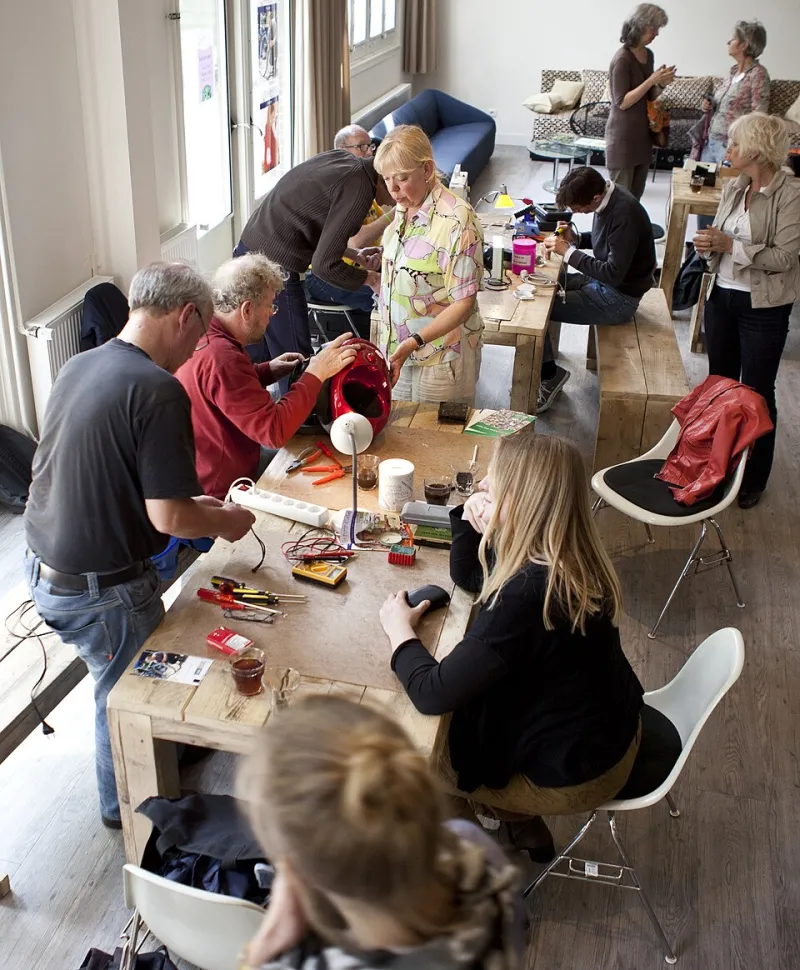
Photo: Ilvy Njiokiktjien, CC BY-SA 3.0, via Wikimedia Commons
Repair cafés are one of the better ideas to come out of the UK’s community hall circuit. Volunteers give up a Saturday morning, someone brings a faulty lamp or a laptop with a loose hinge, and by lunchtime there’s a small victory and a lot of tea. Lovely. But the warm glow has a flip side: too many people arrive expecting a free professional repair service, complete with parts, liability cover and a turnaround time. That’s not what a repair café is, and treating it that way is a quick way to burn out the people keeping it going.
This isn’t a knock on repair cafés. It’s a guide to using them well. Think of a volunteer fixer as a skilled neighbour with a multimeter and a good intentions policy — not as an unpaid rival to your local repair shop.
What a repair café actually is
Most UK repair cafés are volunteer-run, not-for-profit events in libraries, churches, community centres and village halls. They usually run once a month, maybe less. The volunteers bring tools, know-how and a willingness to help you diagnose and fix things. They do not usually bring a warehouse of spare parts, a courier collection service or a commercial guarantee. They are there to share skills, reduce waste and help you understand what’s gone wrong.
That means the relationship is different from a shop. You’re not a customer; you’re a participant. The volunteer is not obliged to fix anything, especially if the fix is unsafe, uneconomic or outside their experience. The best visits feel like a workshop, not a counter.
What volunteers can realistically fix
Repair cafés are brilliant at mechanical and straightforward electrical jobs. Loose hinges on a laptop, a wobbly chair, a lamp with a dodgy switch, a vacuum cleaner with a blockage, a cable that needs re-terminating, a loose wire in a plug, a toy that’s stopped moving — these are the bread and butter. Simple soldering is often possible: a loose wire, a cracked joint, a jack plug that needs attention. A volunteer can also clean a charging port, diagnose a faulty power supply and show you which part to order.
They can also be excellent at triage. If they can’t fix your device, they can often tell you whether it’s worth paying a professional to look at it. That advice alone can save you money.
What they cannot do
A repair café is not a board-level repair lab. Don’t expect microsoldering, data recovery, water-damage resurrection, bonded screen replacement, or a fix for a MacBook logic board that has had a cup of tea poured into it. Many volunteers won’t touch microwaves, gas appliances or anything with serious mains safety implications unless they are properly qualified. They can’t honour a manufacturer’s warranty, and they can’t magically source a rare part for a 2019 device on a Saturday morning.
They also can’t guarantee the repair. A volunteer might fix your toaster and it might fail again next week. That’s the nature of community repair. If you need a warranty, a guaranteed turnaround and a formal invoice, you need a commercial repair service.
Before you go: the preparation checklist
Check the café’s opening times and whether you need to book. Some are drop-in; others have queues and cut-off times. Bring the device, the charger, the cable and any accessories that matter. Charge the device beforehand if you can. Back up anything important, and if you’re bringing a phone or laptop, be prepared to remove sensitive data or stay with the device while it’s worked on. Don’t hand over a unlocked device full of personal files and wander off.
Write down the symptoms: when it started, what happens, what you’ve already tried. If you know the model number, bring it. If you’ve already bought a replacement part, bring that too. Be honest about water damage, previous repair attempts and anything you’ve done with a screwdriver. Volunteers can work around a lot, but they can’t diagnose around a mystery.
And please don’t bring a bag of five devices and expect them all to be seen. Pick the one that matters most. Bring one problem, not a job lot.
Questions to ask when you arrive
Ask what the volunteer is comfortable working on. Ask whether they have the part or whether you’ll need to order it. Ask if you can watch and learn. Ask what the safety limits are. Ask what you should tell a professional if the café can’t fix it. Ask whether there’s a donation box and what the suggested amount is. These are all normal, respectful questions.
What you shouldn’t do is march in, put a device on the table and say ‘can you just fix it’ without any context. ‘Just’ is doing a lot of heavy lifting in that sentence. A volunteer needs to know what the device is, what it’s doing, and whether you’ve already tried the obvious things.
How not to waste their time
Don’t treat the café as a free diagnostic service for a quote you’re going to take to a shop. Don’t expect free parts. Don’t argue when a volunteer says a job is unsafe. Don’t bring a device you’ve already attacked with a metal pick and a YouTube tutorial unless you tell them exactly what you did. Don’t leave a device behind unless the café explicitly allows it. Don’t overstay after closing time. Do say thank you, do donate if you can, and do leave a positive review for the organisers.
The volunteers are not there to be scrounged from. They’re there to help you learn, fix what can be fixed and make a small dent in the UK’s e-waste mountain. Treat them like people doing you a favour, because that’s exactly what they are.
When to go professional
If the device is valuable, safety-critical, water-damaged, still under warranty or likely to need board-level work, go to a proper repair shop. A repair café can be a useful second opinion, but it isn’t a substitute for insured, warranted work. There’s no shame in paying for expertise. The shame is in pretending that free volunteers owe you a commercial service.
Used well, a repair café is a brilliant resource: part classroom, part workshop, part community glue. Bring curiosity, a charged device and realistic expectations. The volunteers will thank you — and you might learn enough to fix the next thing yourself.